
Porcelain vs natural stone: the side-by-side comparison
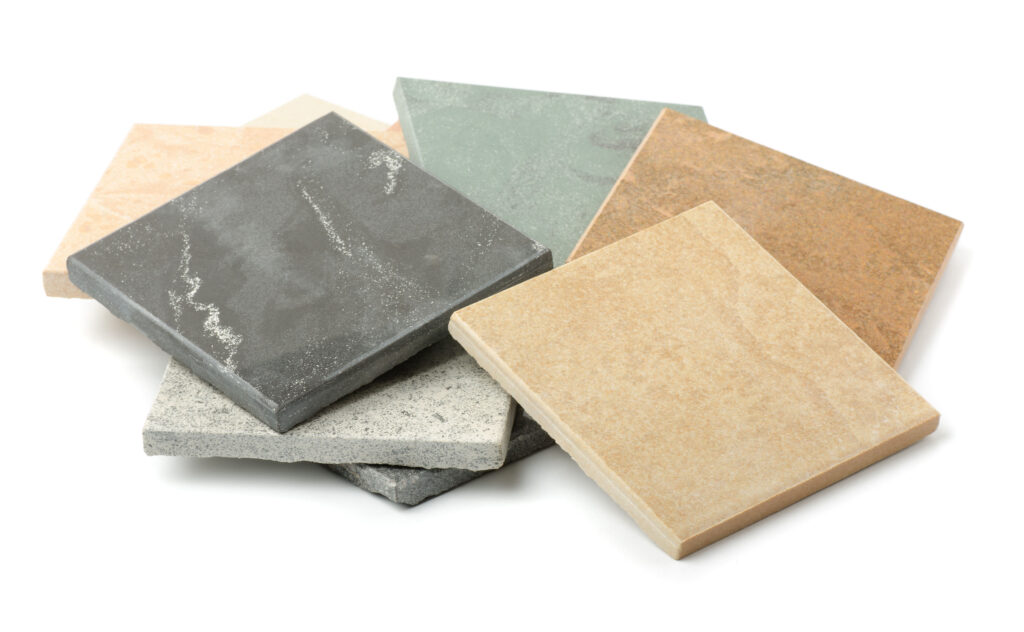
Here’s the practical difference most people actually notice once it’s down.
Best for….
Best for modern gardens
Porcelain (especially large-format, clean edges, consistent tone).
It pairs brilliantly with contemporary planting and crisp borders.
Best for traditional homes and “soft” garden style
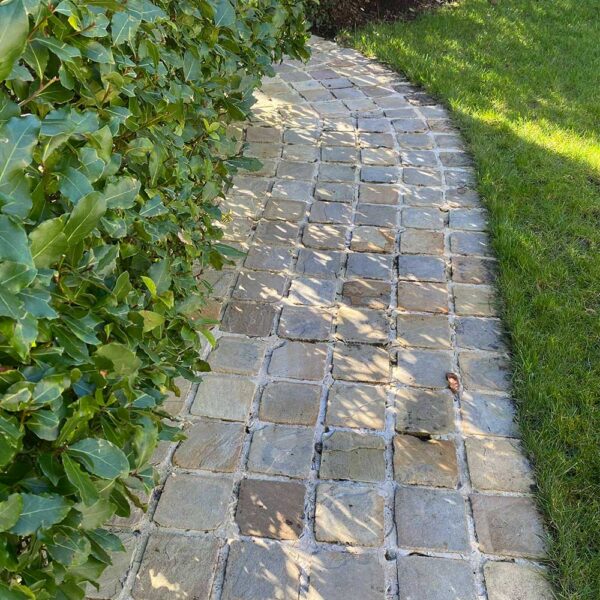
Natural stone — often sandstone or limestone.
It has a warmth that suits older brickwork, stone walls, and more natural planting.
Best for shady gardens (where moss & algae is common)
Either can work — but the finish matters more than the material.
Look for textured / grip finishes
Prioritise good falls and drainage
Consider colour: very pale paving can show green growth more quickly
Best for pets
Both are fine, but think about
Grip (especially when wet)
Jointing (mud + paws + joints is where mess builds up)
Ease of cleaning
Porcelain is often chosen for “hose it down” simplicity, but a good stone choice can be just as practical.
Best for heavy traffic (kids, parties, lots of furniture)
Granite and many porcelains perform really well.
The key is proper installation — a great material laid poorly won’t last.
Best for low maintenance
Porcelain often wins here — as long as you choose the right slip rating/finish for outdoors and it’s installed correctly.
Slip resistance & algae, what’s realistic in UK weather
A patio in the UK will get wet. If your garden is shaded, it will also get green growth at times — that’s normal.
What matters is making sensible choices;
Choose European porcelain, which is less porous with a suitable slip resistance (ask if you aren’t sure)
Avoid ultra-smooth finishes outdoors unless they’re specifically designed for it
Plan for drainage: standing water is what causes most long-term frustration
Accept that any surface may need an occasional clean — the goal is “easy to maintain”, not “never needs attention”
Staining, sealing, and maintenance differences
Porcelain
Often more resistant to staining from everyday life (BBQs, drinks, muddy footprints)
Cleaning is usually straightforward with the right products
Still benefits from good jointing and regular basic care
Natural stone
Natural stone is… natural. It can be more porous depending on the type and finish. European and Egyptian stones are much harder and less porous than the Indian & Chinese options.
Sealing can be a smart choice in the right setting (especially if you entertain a lot or have a BBQ area)
The upside: stone often develops a beautiful, lived-in patina rather than staying “perfect”
Colour variation & “character”: what to expect over time
This is where many people make their decision.
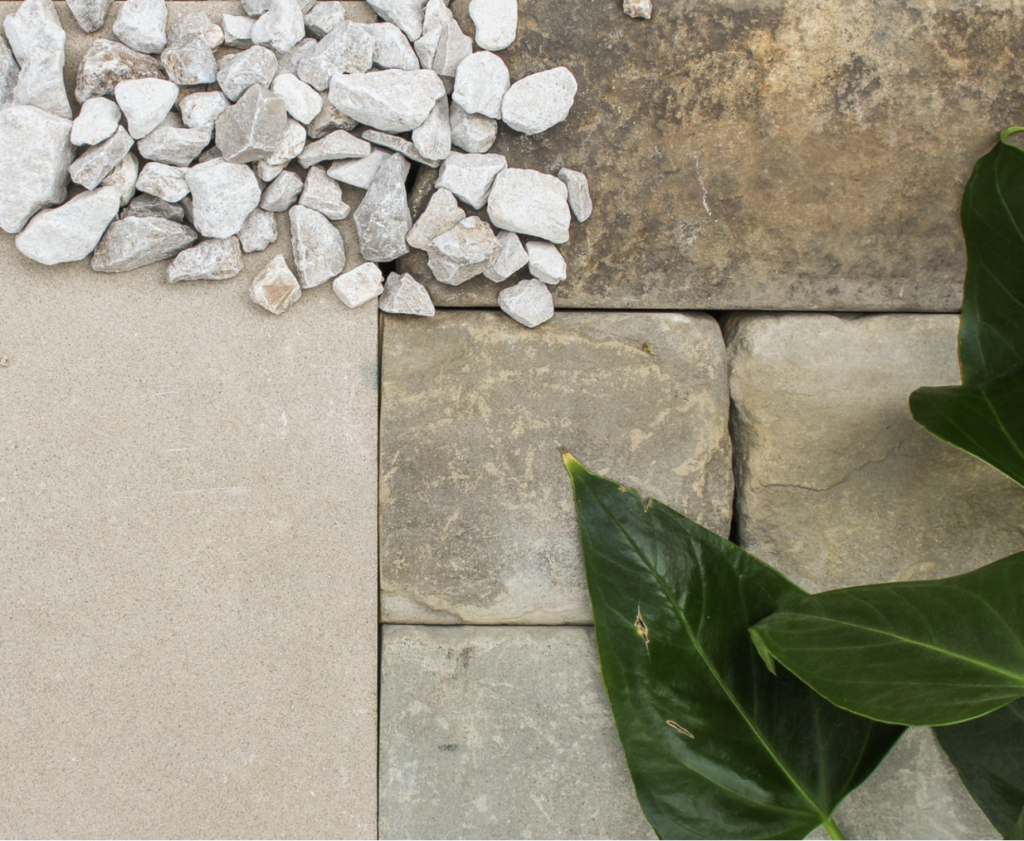
If you love a uniform, designed look, porcelain is usually the safer bet.
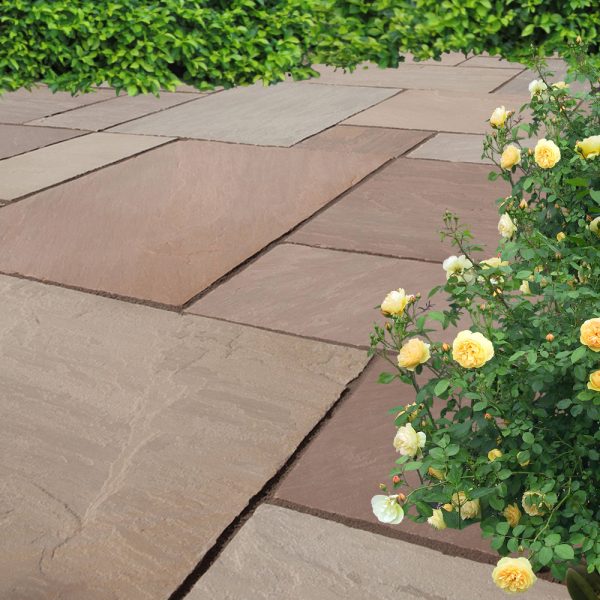
If you want something that feels like it belongs in the garden — with variation, movement and warmth — natural stone is hard to beat.
A helpful way to decide: look at your favourite gardens.
If they feel calm, clean and architectural, you’ll likely lean porcelain.
If they feel layered, planted, and timeless, you’ll likely lean stone.
Installation considerations (why the installer matters as much as the slab)
Most paving problems aren’t caused by the slab — they’re caused by what’s underneath.
Whichever you choose, the long-term result depends on:
A proper sub-base
Correct falls so water drains away
The right jointing for your patio style and use
Care around edges, steps, and transitions
If you’re unsure, this is exactly where a guided selection (with photos and rough measurements) saves time and avoids expensive “second guessing”
Our practical take (Earlswood perspective)
If you want a patio that still looks great in five years, the material choice matters — but the right choice for your garden matters even more.
Porcelain can be brilliant for modern, low-fuss spaces. Natural stone can be unbeatable for warmth and character. The win is matching the paving to your home, your light levels, and how you actually live outside.
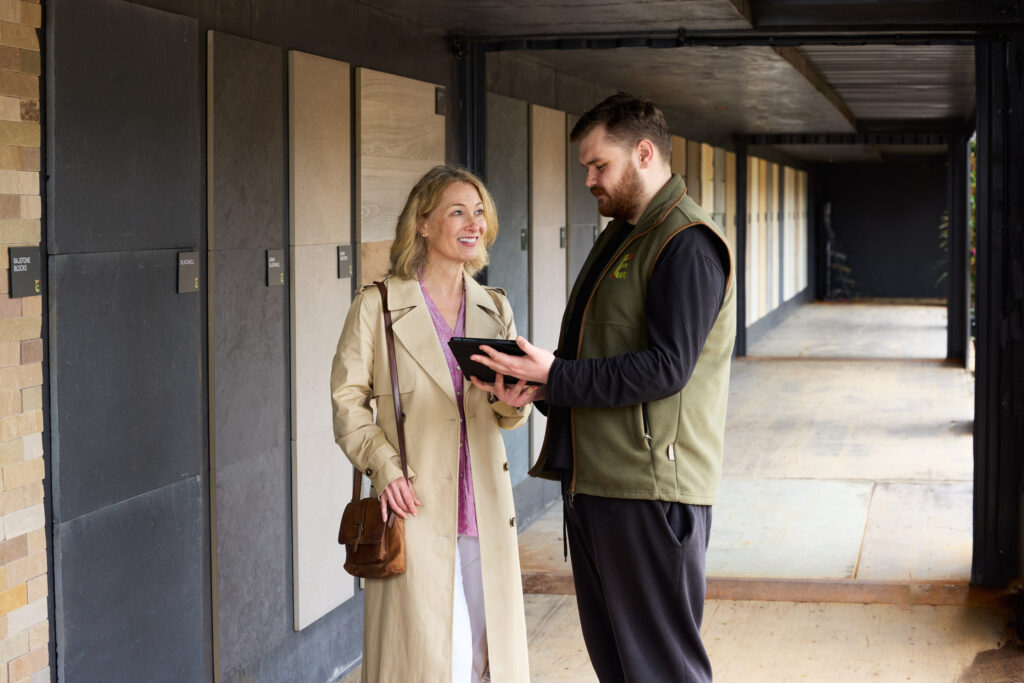
If you’d like, bring a few photos and rough measurements — we’ll help you narrow it down in one visit.
We do have on site our very own paving specialist who will advise not only on your stone but also on what you need to lay your stone so that everything is delivered together but more importantly our stone specialist in the Landscape Village will advise on the right products to protect your stone, the best cleaners for the annual stone cleaning (we recommend this is done after the winter months, around March/April). If you prefer we can arrange stone cleaning of your patio for you and will be happy to quote for this service, annually or as a one-off.
Should your patio need specialist attention once its laid, these things happen say someone spills oil or grease or red wine on your lovely terrace then do contact us, we have the right products and the specialist help you need to avoid it becoming a catastrophe.